


Imagine a world where your colleague isn’t a person but an AI algorithm diagnosing diseases with unmatched precision, predicting equipment failures before they occur, or crafting marketing strategies in minutes. This isn’t science fiction, it’s the reality we’re rapidly approaching. AI-powered diagnostic tools, predictive maintenance systems, and generative AI platforms are already transforming industries, setting a new benchmark for efficiency and innovation.
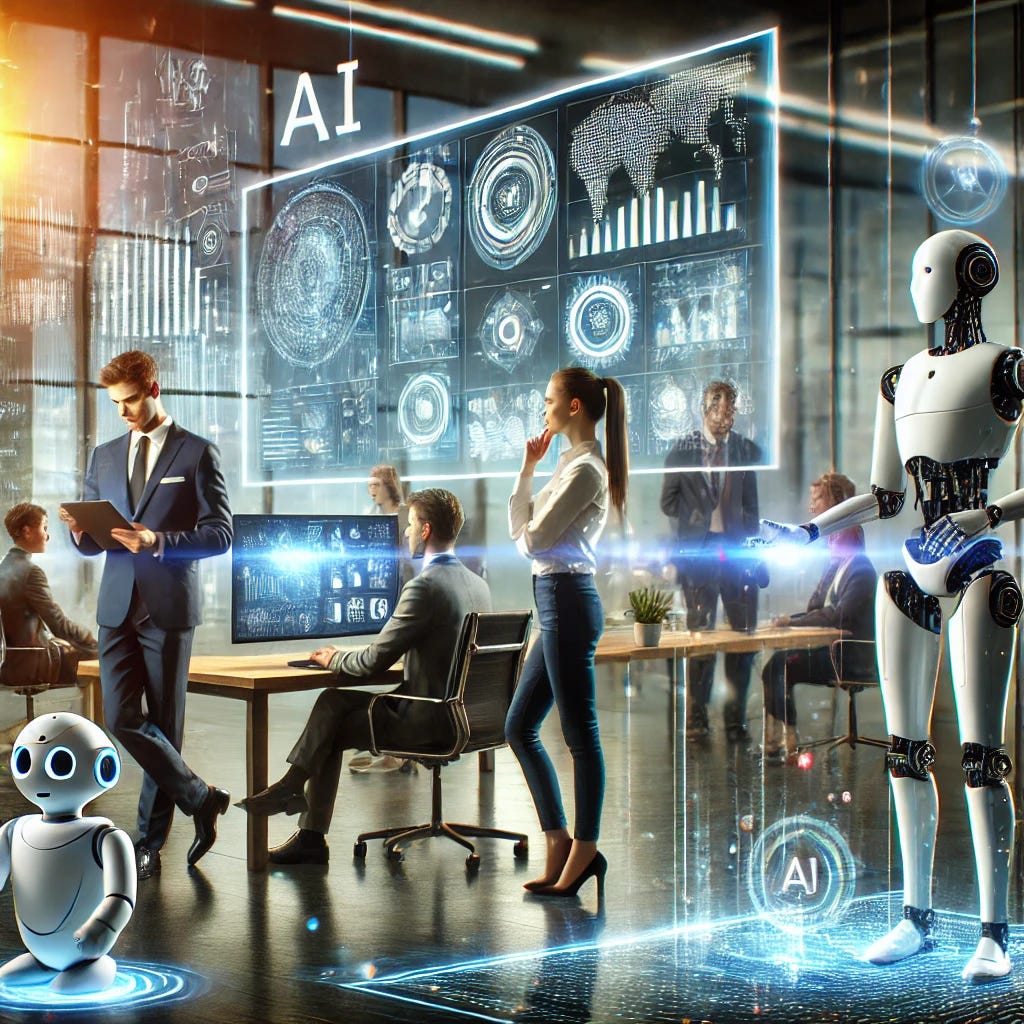
The pace of AI development is accelerating, and those who fail to adapt risk being left behind. As AI reshapes the workplace, it creates unparalleled opportunities while posing significant challenges. This article will guide you through the transformative power of AI and provide actionable strategies to prepare for an AI-driven future.
The Transformative Impact of AI
AI is revolutionizing industries, introducing efficiencies and capabilities once thought impossible. Consider these examples:
Automation of Routine Tasks: In Amazon warehouses, AI-powered robots optimize inventory management, predict demand, and streamline delivery processes. This integration has reduced costs and enhanced customer satisfaction.
Enhanced Decision-Making: Financial institutions like JPMorgan Chase use AI to analyze massive datasets, enabling faster, more accurate risk assessments and investment strategies.
Revolutionized Customer Service: Companies like Sephora deploy AI chatbots to provide personalized product recommendations, offering a seamless customer experience.
However, these advancements come with challenges:
Job Displacement: Roles involving repetitive tasks, such as data entry or assembly line work, are increasingly automated. This shift underscores the need for workforce reskilling.
Ethical Considerations: Organizations face pressure to ensure AI systems operate transparently and without bias.
Reskilling Needs: Employees must pivot to roles requiring advanced skills to remain competitive.
In an AI-driven world, uniquely human skills are essential to complement machine capabilities. Key skills include:
Critical Thinking and Complex Problem-Solving: As AI handles routine decision-making, humans are needed for strategic thinking and tackling nuanced challenges. For example, analyzing AI-driven insights to formulate a business strategy requires contextual understanding only humans can provide.
Creativity and Emotional Intelligence: These skills remain vital for fostering innovation, building relationships, and navigating complex interpersonal dynamics. Leaders with high emotional intelligence will be better equipped to manage hybrid teams of humans and AI systems.
Digital Literacy: Understanding how AI tools work and integrating them effectively into workflows is non-negotiable in today’s workplace.
To develop these skills, consider:
Enrolling in online AI-focused courses, such as Stanford’s Machine Learning or Harvard’s Data Science programs.
Participating in workshops or hackathons that foster creativity and teamwork.
Practicing mindfulness to enhance emotional intelligence and interpersonal awareness.
So, how can you navigate this evolving landscape and thrive in the age of AI? Here are some key strategies:
For Individuals
Embrace Lifelong Learning: Platforms like Coursera, edX, and LinkedIn Learning offer certifications in data science, AI ethics, and more. Choose courses aligned with your career goals.
Cultivate a Growth Mindset: Adopt a perspective that views change as an opportunity. Experiment with new tools like ChatGPT or Jasper AI to enhance productivity and creativity.
Focus on Complementary Skills: Strengthen your leadership, negotiation, and strategic planning abilities—areas where humans excel over machines.
Network Strategically: Join professional groups focused on AI adoption and attend industry conferences to stay informed and connected.
For Organizations
Develop an AI Strategy: Define clear objectives for AI implementation, focusing on measurable outcomes.
Foster a Culture of Experimentation: Encourage teams to pilot AI initiatives, learning through trial and error.
Invest in Employee Training: Create programs to help employees understand and use AI tools effectively.
Establish Ethical Guidelines: Build trust by adopting transparent and inclusive AI practices.
The AI revolution is reshaping the workplace at lightning speed, presenting challenges like job displacement and ethical concerns alongside immense opportunities for innovation. Success in this era will belong to those who act now, investing in skills and strategies that ensure they remain relevant in a world where AI and humans work in partnership.
Take the first step today: identify a skill you want to strengthen and explore available resources to develop it. Engage with peers, mentors, and industry leaders to share insights and best practices. By embracing the change and shaping it proactively, you can thrive in this transformative era.
The future of work isn’t about choosing between humans and machines—it’s about building synergy between them. Together, we can unlock possibilities that redefine what’s achievable. Are you ready to lead the way?